



So many of us are exhausted by the media environment we live inside—the scandals, the outrage, the fear, the endless framing as a battle between us and them. But there is another kind of absence too. So much of what matters most in our lives—our relationships, our inner struggles, our longing for meaning and belonging, the challenge of living with greater care and wisdom—receives remarkably little sustained attention. Whether through cable news and social media, podcasts or online publications, we are surrounded by an enormous amount of content while often being offered surprisingly little depth.
That exhaustion, and that hunger for something deeper, are among the reasons we are creating At The Root, a new media platform launching later this fall. We’re building a place to slow down, widen our gaze, and look more deeply at the defining issues of our time, across our inner lives, our relationships, our communities, our shared world, and the places where they meet. Rather than simply chasing the latest controversy or treating our personal and societal challenges as separate things, we want to explore what lies beneath them: the psychological, relational, social, historical, cultural, systemic, and spiritual forces shaping our lives, along with the possibilities for repair, healing, and a more grounded way forward.
If that sounds like something you’ve been looking for, you can subscribe early at www.attheroot.media. We’re beginning to build the community before launch, and I’d love to have you be part of it.
Because the problem At The Root is trying to address isn’t simply that there is too much bad news. It’s that the structure of our media increasingly determines which stories get told, how they get told, and therefore what parts of reality we repeatedly see.
Stories move at extraordinary speed. Something consequential happens, we get a headline, a clip, maybe thirty seconds of commentary, and then the machinery moves on to the next controversy. Important questions are sometimes raised but rarely explored. Context gets compressed. Complexity disappears. Whatever is most provocative tends to rise to the top.
There are obvious economic reasons for this. Much of our media now operates inside an attention economy shaped by an almost impossible demand for continual growth and ever-greater returns. Clicks, views, engagement, subscriptions, and advertising dollars matter enormously, and fear and outrage are especially effective at capturing our attention. A headline that leaves us alarmed, furious, or incredulous is awfully hard not to click.
But I think the consequences go much deeper than clickbait.
Media doesn’t simply tell us what’s happening. Over time, it helps teach us what kind of world we are living in. Human beings have always understood ourselves through stories. Long before newspapers, television, or social media existed, stories helped us make sense of who we were, how to understand our inner lives and relationships, where we belonged in our communities, and how to understand the larger society and world around us.
Today, an enormous portion of that storytelling happens through media. And when the stories surrounding us are disproportionately organized around conflict, threat, scandal, and division, it shouldn’t surprise us when the world begins to feel more frightening, hostile, and divided than it actually is.
Our divisions are real, of course. There are profound disagreements in American life, along with enormous social, economic, cultural, and political pressures that shouldn’t be minimized. But something else is true at the same time: we often misunderstand one another more than we realize. Research into political polarization has repeatedly found that Americans tend to exaggerate the extremity of people on the other side and underestimate the amount of common ground that still exists between us.
That matters, because if I am continually shown the most outrageous example of people who supposedly represent “the other side,” eventually that example begins to stand in for millions of people I have never actually met. They become caricatures. And once we believe our neighbors are fundamentally unreasonable, dangerous, or beyond reach, we begin behaving toward them accordingly.
This is true beyond politics as well. Our mainstream media rarely makes much room for the deeper questions of how to live a good life—how to meet our inner struggles, our relationships, and one another with greater care, gentleness, and skill. These dimensions of life are often ignored, treated superficially, or separated from the larger social and systemic forces that shape them. We rarely explore how our inner lives and our shared world continually act upon one another.
In all these ways, distorted perceptions, and incomplete ones, can eventually help create the very reality they seemed merely to describe.
The media isn’t solely responsible for our polarization. We all participate in the system. We click. We share. We reward the stories that provoke us. Political leaders, influencers, and media personalities have learned to exploit those same dynamics. But we should take seriously the enormous power of an information system that surrounds us for hours every day and continually directs our attention toward certain aspects of reality while leaving others largely invisible.
And that may be one of the most important pieces of this: it’s not only what we are being shown. It’s what we aren’t being shown.
We hear about the school shooting. We hear much less about the deeper conditions that make violence more likely, or about the communities developing approaches that might prevent it. We hear about political polarization. We hear less about the psychology of belonging, humiliation, identity, status, fear, and threat that can make polarization so powerful. We hear about loneliness, anxiety, and stress as individual problems, while hearing far less about the social conditions producing them, or the ways our relationships, communities, workplaces, technologies, and institutions shape our inner lives.
And we rarely put these pieces together.
We tend to divide the world into categories: psychology over here, politics over there, spirituality somewhere else, economics in another section, relationships relegated to their own corner. But human life doesn’t work that way. What happens inside us affects the societies we build, and the societies we build affect what happens inside us. Our nervous systems, relationships, institutions, histories, cultures, and political systems are constantly shaping one another.
If we want to understand the defining issues of our time, we have to become much better at seeing those connections.
That is the deeper ambition behind At The Root. We’re bringing together writers, researchers, academics, practitioners, organizers, philosophers, spiritual thinkers, and others working at the leading edges of their fields—not because any one discipline has the answer, but because the problems we face are too interconnected for any single lens to explain them.
We want to ask not only What happened? but Why is this happening? What sits underneath it? What does psychology have to do with politics? What does history have to do with our relationships? What does trauma have to do with culture? What does belonging have to do with democracy?
And just as importantly, we want to ask where something is beginning to heal. What are people learning? What possibilities are emerging that we aren’t hearing enough about? What’s working that deserves more attention?
Because going to the root doesn’t mean endlessly diagnosing what is broken. It also means understanding the conditions that allow something different to grow.
There are extraordinary people already doing this work—researchers discovering more about human behavior and cooperation, communities experimenting with new ways of repairing division, practitioners helping people heal trauma, thinkers exploring consciousness and meaning, organizers redesigning institutions, and artists helping us imagine worlds that don’t yet exist.
So much wisdom already exists. What’s missing are enough places capable of bringing those insights together, connecting the dots among them, and bringing them into our shared cultural conversation.
That is what I hope At The Root can become: not another machine for telling us what to be outraged about today, but a place for stories that help us understand one another and ourselves more deeply. Stories that illuminate what lies beneath our problems. Stories that reveal possibilities alongside breakdown. Stories that might help us remember that even in a deeply fractured moment, another way of being together is still possible.
If this resonates with you, please subscribe now at www.attheroot.media. We’ll be launching later this fall, and subscribing now is the best way to follow along as the project comes to life.
I hope you’ll join us. Because changing the stories a culture tells about itself may be one of the ways we begin changing the culture itself.
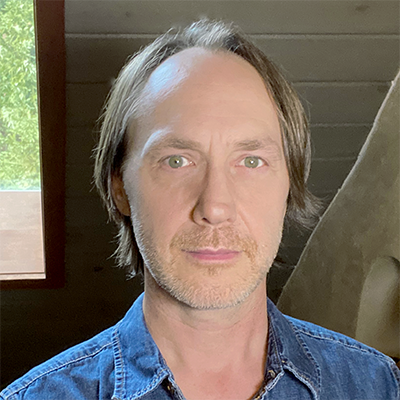
Matthew Albracht is the Board Chair of The Peace Alliance (www.peacealliance.org), a U.S. based NGO which advocates for domestic and international peacebuilding priorities. His writing has appeared on CNN, Newsweek, Salon and HuffPost, among other outlets.
His personal Substack writings explore how we heal—from the inside out and the bottom up—personally, politically, and culturally—with a particular focus on the intersections between them all. Weaving together politics, psychology, and personal growth, grounded in systems thinking and trauma-awareness.