


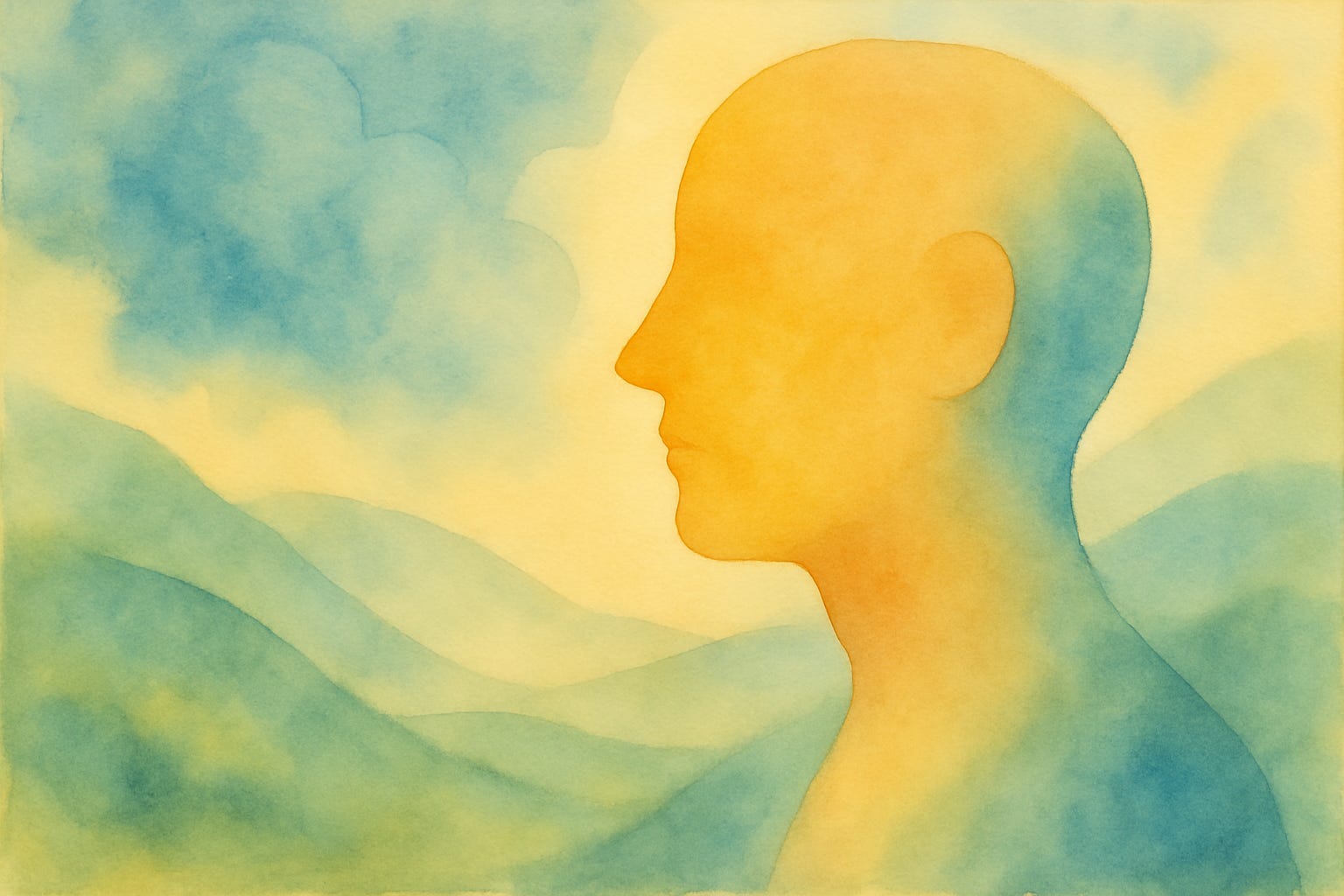
“One of the most profound shifts in my life has come from learning to relate to others from a more radically accepting place. This dynamic—of meeting people where they are, not where I wish they’d be—has taught me more about life, love, and growth than perhaps anything else. It reminds me that most people, like me, are doing the best they can with the tools they have. We all carry invisible burdens. When we’re given the room to show up as we are—without being squeezed into someone else’s ideal—something more sacred becomes possible. It’s the foundation for deeper intimacy and a more divine unfolding.”
We all know—most of us too well—that life can be full of uncomfortable circumstances and experiences we’d rather avoid. Much of my life has been spent trying way too hard to manage or control these outside experiences, especially those that threaten my sense of emotional comfort or perceived safety. I’ve invested so much energy dodging discomfort and pain—and too often the situations that bring it. But the truth is, that strategy eventually breaks down. It can be exhausting. And it ultimately doesn’t work.
Some level of pain and discomfort is inevitable in life. But when I’ve fought too hard against my emotional experience—trying to control external circumstances to feel more secure rather than accepting what is—it can feel like wrestling the winds of a hurricane sometimes. And all it really does is stir up more inner storms, often fueled by past challenges or traumas that I’m reliving in the present.
The price for all this resistance has been steep. I can really wear myself down. And over time—through age, experience, and a lot of inner work—I’ve come to see that much of the turbulence is actually self-generated. A cyclone of unmet expectations, emotional overextension, and the illusion that control would keep me safe. (Are you enjoying my little TED Talk on emotional weather patterns??? )
Relationship challenges relating to this dynamic have always been especially tricky. I’ve held so many unrealistic expectations: wishing a partner would always speak to me in soothing, non-confrontational tones (even while harshly judging myself when I fail to do the same—which, let’s be honest, is often); hoping a colleague would better recognize my contributions (or better yet, my brilliance!); or just wanting a random grocery store clerk to not be actively rude. The list goes on. (Tell me I’m not the only one who mentally relives and rewrites awkward stranger interactions three hours after the fact!)
Culturally, we’re often told we should raise our relational expectations—demand respect, stand up for our needs. And in many cases, there’s some validity there. But I’m learning it’s less about getting people to meet me where I am at, and more about finding resonance, creating healthy boundaries when needed, and most importantly, letting go of the fantasy that someone who isn’t capable (or willing) to meet me where I want them to will suddenly transform if I just “push” and “fight” harder. For me, that has only created more pain—for everyone involved.
For some years now, I’ve been working to embody a different way of holding life’s inevitable challenges. I’ve been learning to consciously cultivate a psychological and spiritual practice of radical acceptance. It’s not about giving up or letting life or other people walk all over me. It’s about becoming more receptive, permeable even—especially in moments that trigger frustration, fear, or longing. (And bonus points if it’s poking at my very convincing illusion of control!)
One of the most profound shifts in my life has been learning to relate to others from this more grounded and open place. I’ve been practicing the art—because it is an art—of meeting people where they are, not where I wish they’d be. And when I manage to do that, even imperfectly, something softens. The tight grip of judgment loosens. The fog of unrealistic expectation and longing begins to lift. What emerges is a clearer presence—one that makes space for genuine connection, and even love, much more of a possibility.
This shift hasn’t just shown up in theory—it’s transformed some of my most important relationships. Here’s one example… I tend to run a good bit co-dependent, and one of my default moves is to try and “fix” people or situations (mostly as a way to manage my own anxiety). One of my dear friends had been struggling for years in their relationships and in life. Whenever we talked, I’d offer some empathy, and I felt it—but I was mostly focused on giving advice, laying out strategies, suggesting what might help them shift things, or worse, how I thought they should or could feel. I meant well, but I wasn’t really listening. I definitely wasn’t radically accepting them.
One day, after there had been a couple months of space between us, they reached out and—bravely—shared how this dynamic had been impacting them. Something clicked. A lightbulb moment. I realized I’d been trying to change them, not be with them. That moment softened something in me. I stopped trying to “save” them—or at least, tried to stop (let’s be honest, these kinds of impulses still flare up with people in my life). Instead, I began offering deeper presence, more grounded empathy, and fewer fixes. And something in our relationship shifted. It felt more real. More spacious. Our bond deepened. In feeling more deeply heard, they were even better able to move on to other topics more swiftly.
In fact, to my surprise, again and again, I’ve watched something beautiful unfold when I release my story of who or how someone should be. When I give them space to simply be who they are, without pressure or demand, our connection has a chance to evolve organically. Sometimes it grows into something richer than I imagined. Sometimes it doesn’t. But even in the letting go, there is grace. There is freedom.
And it hasn’t just been about softening—it’s also meant being more honest with others. Not the sharp-edged kind, but the kind that makes room for truth and love to coexist.
This dynamic—of loosening expectations and better accepting what arises—has taught me more about life, love, and growth than perhaps anything else. It reminds me that most people, like me, are doing the best they can with the tools they have. And when we’re given the room to show up as we are, without being squeezed into someone else’s ideal, something sacred can happen. A new kind of intimacy. A more divine unfolding. A deeper peace.
And the same goes for how I meet myself. That’s maybe the hardest of all. My inner critic is strong. (It can be quite loud, persistent, and has annoying opinions on just about everything!) The voices of “should” and “not enough” run deep. But I’ve noticed that the more I meet myself with compassion the more progress I make toward being my best and highest self. Judgment and shame pull me backward. Gentle, consistent self-acceptance moves me forward. Turns out shame and self-judgment aren’t great life coaches. Who knew?
I’ve found that transformation doesn’t come all at once. It’s not some epic turning point. It’s daily. It’s subtle. It’s a long game of rewiring my brain’s circuitry. Of unspooling. Of softening. Of learning to tend instead of tense.
“Radical acceptance” has become my big guidepost—one I work to stay attuned to, and one that makes more of that possible. It’s not about perfection—I dip in and out of it every day (sometimes very deeply out of it, yikes). But having that anchor means I can return to it. In moments of frustration, disappointment or heartbreak, I can pause, remind myself, “This is what’s happening. I’m safe. I have choice. I can allow. I can accept.” All this is aided by my regular grounding practices like conscious breath-work, yoga, prayerfulness, therapy (!) and working to stay mindfully present.
Sometimes acceptance does mean creating distance from people. Sometimes it means saying no. It can be tough—but when it’s grounded in clear-eyed compassion rather than resentment, judgment or blame, it opens the door to more authentic connection in my relationships. This has all been a game-changer for me. When I stop trying to control outcomes and instead root into presence, I create the conditions for something real to emerge.
And over time, I’ve seen that reflected back to me. The more I love and accept my loved ones where they’re at—which certainly includes sharing my own needs—the more they often meet me with the same. It can become a beautiful, nourishing circle, a web of mutual care.
I don’t expect to “arrive.” I don’t expect to nail this perfectly. But I know now that resistance drains me, while acceptance frees me. And I know I want to keep returning to that freedom, that fluidity and beautifully alive flow of life. Again and again.
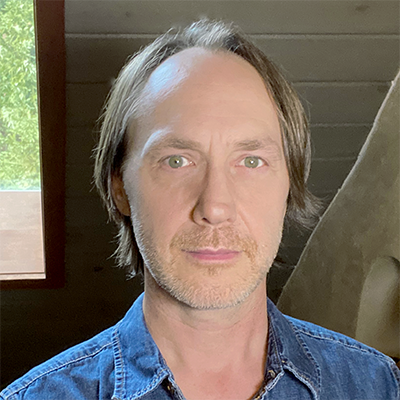
Matthew Albracht is the Board Chair of The Peace Alliance (www.peacealliance.org), a U.S. based NGO which advocates for domestic and international peacebuilding priorities. His writing has appeared on CNN, Newsweek, Salon and HuffPost, where he contributed regularly, among other outlets.
His Substack writings explore how we heal—from the inside out and the bottom up—personally, politically, and culturally—with a particular focus on the intersections between them all. Weaving together politics, psychology, and personal growth, grounded in systems thinking and trauma-awareness.