



I heard a new phrase the other day that instantly grabbed my attention and moral imagination: truth to pain.
Where truth to power confronts the people and systems causing harm, I learned truth to pain turns toward the wound underneath: the one in the people we most want to change, and often the one in ourselves. The idea is to meet the wound first. Not instead of the hard truth, but so the hard truth has a chance to land.
Most of us are familiar with “truth to power.” It has become an important touchstone in relational life, in advocacy, and in social justice. Speaking truth to power usually means openly confronting people with authority or influence with truths they’d rather not hear, especially about injustice, harm, or the abuse of power. In activist circles, it’s a rallying cry for justice. It’s a concept I have great respect for and a phrase I use often. It also has deep roots in the peace movement. The phrase is often credited to Bayard Rustin, and in 1955 it became the title of a Quaker pamphlet, Speak Truth to Power: A Quaker Search for an Alternative to Violence.
But in the hyper-charged, divisive age we’re living through, this empowering idea can also be misused. Like any moral idea, it can also be wielded in ways that reproduce some of the dynamics it was meant to challenge: punishment rather than transformation, humiliation rather than persuasion. For those of us who have a hard time speaking up and speaking out, calling on it can be a real help. But some of us use it more to merely punish and shame our opponents (sometimes as the end goal) rather than to practice the subtle art of changing hearts and minds for the long-term good. I think this latter dynamic can drive much of our cultural divide, and likely many of our interpersonal divides too.
I’m not writing this from the outside. I’ve spent decades in advocacy work trying to speak out for justice. Too often, I led with anger. The anger was often justified. Leading with it rarely was. Anger can be a cheap, fast-burning fuel that leaves even more divide in its wake. And most importantly, I rarely made real connection with the people I wanted to influence. It drove us further apart.
Part of the issue is what we mean by “power.” There is power over, and there is power with. Far too often, power means power over: domination, coercion, controlling others, whether through systems or individually. Power with is relational: the capacity we create together through cooperation, mutuality, shared purpose, and collective action. At its highest, truth to power is a counterweight to injustice and coercion. So I want to be clear: I’m not critiquing the concept or its important use. I’m calling out important nuances in how it can sometimes be held and wielded. We can oppose domination while unconsciously adopting its logic. Without something like truth to pain, we can easily slip into the very patterns of domination and coercion we’re trying to overturn.
This is where truth to pain comes in. I was drawn into both the contrast between the two ideas and the beautiful fellowship they could carry for and with each other.
Truth to pain adds a whole new layer to the equation, one that could be a helpful counterbalance to our over-reliance on a punitive kind of power. Speaking truth to pain means naming hard truths in a way that first recognizes and makes room for the hurt, fear, or trauma that may be shaping how someone sees the world (and who among us doesn’t carry at least some of this). So much pain and suffering is on the surface right now, and us-versus-them dynamics dominate so much of social and political advocacy. In that climate, this feels like a missing piece of the puzzle. If we want real change and transformation, that is. We have to better understand the underlying currents that sustain injustice—and the ones that make transformation possible.
We can see this interpersonally too. Many of us lash out at others when we feel or see harm. But that often breeds more toxic shame instead of connection, and it closes off the chance to understand harm and then transform it. When we feel seen and heard, we’re more open to hearing and learning. That feels like the real key to the kingdom.
As I’ve explored and researched the idea, five components seem to define it:
Recognize the pain (and often fear) as real. You don’t begin by arguing somebody out of their suffering.
Distinguish the pain from the story built around it. A person’s suffering or fear can be entirely genuine while their explanation of who caused it, why it happened, or what will cure it is wrong.
Don’t confuse validation with agreement. “I see why you’re hurting” is not the same as “everything you believe because you’re hurting is true.”
Tell the difficult truth without contempt. The aim isn’t to win an argument or prove moral superiority. It’s to get close enough to the wound that something might actually change.
Look beneath the symptoms toward the causes. What someone instinctively does to protect a wound can sometimes keep it from being treated. That medical lens is where this idea first reached me. I heard the phrase truth to pain from Dr. Abdul El-Sayed, a physician now running for U.S. Senate in Michigan, who learned the practice in medicine and now carries it into politics.
We see power over dominating so many aspects of life and culture, and I think much of it is born of pain. Holding that complexity is such an important thing to add to our cultural conversations and how we hold them. I’d love to see these ideas flourish in the work of social change. It seems far more sustainable, and ultimately more nourishing. That doesn’t mean we stop calling out injustice or harm, at times even fiercely. It means we go deeper, to its heart and its roots.
Truth to pain doesn’t weaken truth to power. It may be what keeps truth to power from becoming another form of power over. Maybe truth to pain isn’t a new idea at all, but a way back to what truth to power was meant to be.
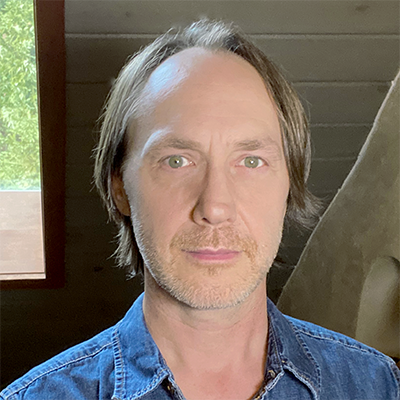
Matthew Albracht is the Board Chair of The Peace Alliance (www.peacealliance.org), a U.S. based NGO which advocates for domestic and international peacebuilding priorities. His writing has appeared on CNN, Newsweek, Salon and HuffPost, where he contributed regularly, among other outlets.
His Substack writings explore how we heal—from the inside out and the bottom up—personally, politically, and culturally—with a particular focus on the intersections between them all. Weaving together politics, psychology, and personal growth, grounded in systems thinking and trauma-awareness.